
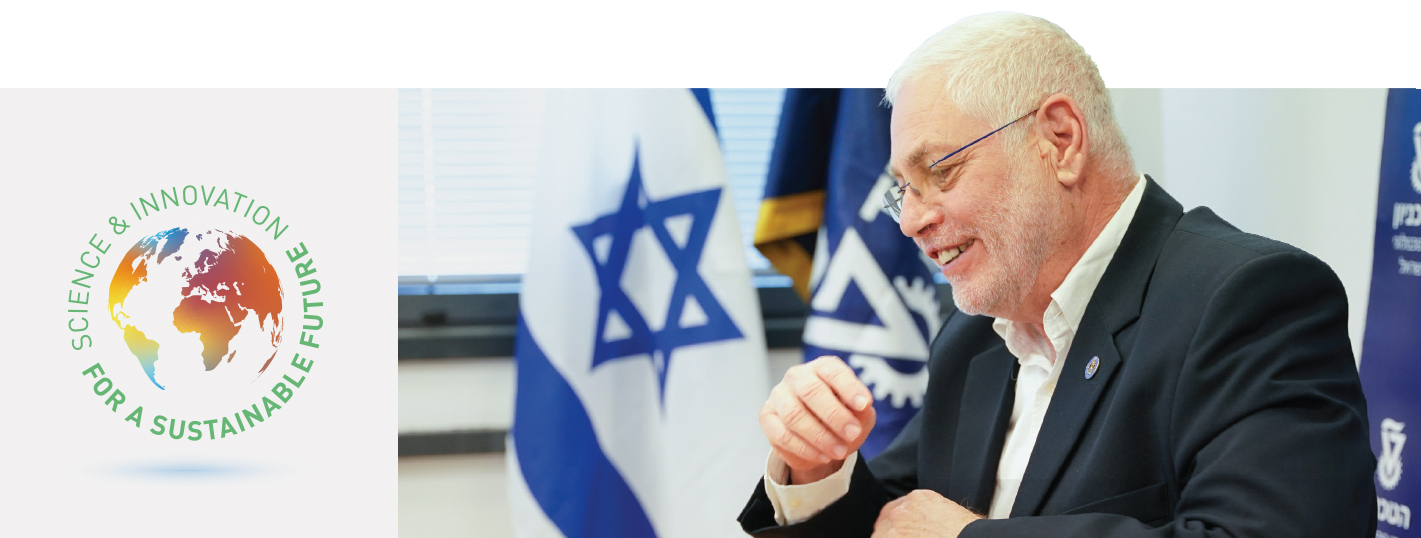
I would like to welcome back the members of the Technion’s International Board of Governors to our beautiful campus. I am delighted that we can meet in person and look forward to an inspiring and productive gathering.
The Technion has emerged from the COVID-19 crisis stronger and more agile, and I hope you will have the opportunity to experience the spirit of innovation and creativity that resonates throughout the university. In fact, the Technion is at a key juncture. We are in the process of making profound systemic changes to keep pace with today’s world and remain a global leader in science and technology 5, 10 and 20 years from now.
We are in the process of making profound systemic changes to keep pace with today’s world and remain a global leader in science and technology.
Innovative learning models
We have proactively started implementing a strategic plan to support new modes of teaching, educating and learning across all faculties. One of the most fundamental changes proposed by the plan is to teach Technion students the skills crucial for thriving in the contemporary workplace, such as leadership, complex problem solving, teamwork and entrepreneurial skills, as well as a heightened awareness of social and environmental issues.
To meet this challenge, we have significantly bolstered the Technion Center for Promotion of Learning and Teaching, which is spearheading implementation of the plan. Using the Center’s resources, faculty members are urged to receive training in modern teaching technologies and up-to-date pedagogic approaches. This year, the Center launched a pilot program whereby education specialists are assigned to individual faculties with the task of upgrading the learning experience. This program is proving to be a success, and next year we hope to expand to additional faculties.
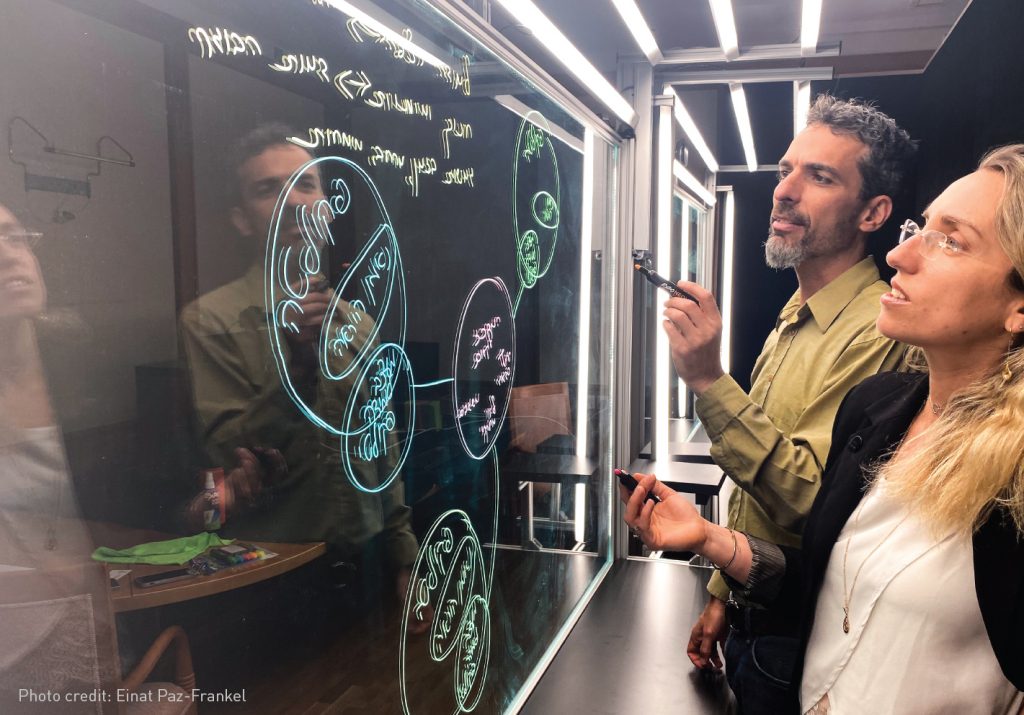
One of the important post-COVID challenges we are facing is how to make the best use of student time on campus. While we are moving forward with our goal of including more digital elements in Technion courses, we are also aware of the crucial value of physical presence on campus. Eventually, large introductory courses will include significant online components, while more advanced courses will be ‘blended’ – meaning that they will be in person and include digital technologies to enhance the interaction between students and teachers. Such pedagogic models create spaces for students and faculty members to connect and share knowledge – which will become increasingly important in the future.
Such pedagogic models create spaces for students and faculty members to connect and share knowledge – which will become increasingly important in the future.

Commitment to sustainability
The Technion’s strategic plan focuses on three key pillars: sustainability, human health, and digital industry. We are prioritizing these broad fields throughout the university, in our research initiatives, in our classrooms, and in our partnerships with industry and government.Since safeguarding the environment is increasingly vital for our collective future, the Technion devotes dozens of research projects in many faculties to developing innovations in fields such as ‘green’ architecture, catalysis, sustainable energy, water purification and environmentally friendly technologies. The Nancy and Stephen Grand Technion Energy Program promotes multidisciplinary research and educational initiatives that focus on sustainable solutions to the global energy challenge.
Furthermore, last October, we announced a decision to stop buying disposable utensils on campus – a policy that symbolizes our commitment to sustainability throughout the university.
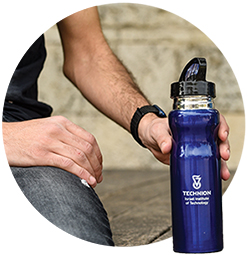
Restricting disposable utensils on campus is a policy that symbolizes our commitment to sustainability.
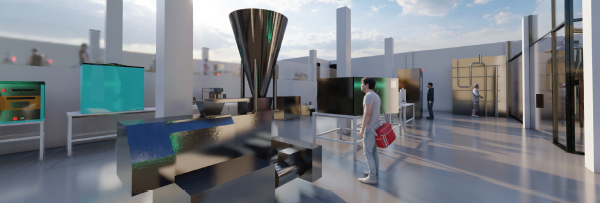
We are also establishing the Carasso FoodTech Innovation Center, which will promote an environmentally friendly approach to the global food industry. The Technion has the only faculty in Israel for research in food engineering, and we will leverage our expertise in this field to help develop sustainable food and improve food security around the world.
Improving human health
In keeping with the Technion’s strong commitment to making the world a better and safer place for all humanity, the university established the Technion Human Health Initiative (THHI). I firmly believe that human health is one of the main challenges facing humanity in the 21st century. Like other huge challenges, a significant revolution in human health requires multidisciplinary efforts. This initiative will encourage the translation of discoveries in human health research into applications and products that serve the medical system. The idea is to bring together researchers from different faculties to build a bridge between medicine and life sciences, exact sciences, engineering, data science, and design.
Part of this initiative is the new joint Technion-Rambam Center for Artificial Intelligence in Healthcare (CAIH) – a partnership between the Technion and Rambam Health Care Campus that will signal a revolution in medical decision-making. It is the first joint academic-hospital center in Israel and one of the first in the world that will develop advanced artificial intelligence systems to analyze patients’ conditions. The Technion’s close relationship with Rambam is consistent with our overall policy of deepening and expanding collaborations between the university and other key stakeholders in Israel, in both the private and public sectors.
A significant revolution in human health requires multidisciplinary efforts.
Collaboration with industry
An important aspect of preparing for the future is to tighten our ties with industry and enable our students to gain real-world experience alongside their theoretical studies. To that end, we have recently signed strategic collaboration agreements with prominent corporations, including the American software giant PTC; Doral Energy, developers of renewable energy solutions; and SolarEdge, a world leader in smart energy technology. In March, the Technion signed a research agreement with Google following the visit of a high-level delegation from the tech giant. In addition to recent agreements and existing ties with industrial companies such as Intel, we will soon be announcing several significant new partnerships with strategic tech partners. These new collaborations will increase the presence of industrial companies on campus, enabling our students and faculty members to be involved in hands-on research and development projects.
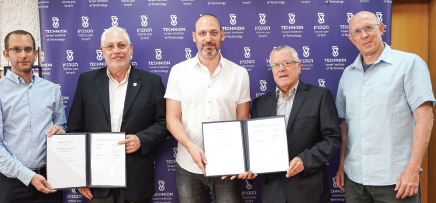
One of the Technion’s most important roles – which I expect will be even more significant in the future – is to help strengthen Israel’s economy and industry by translating cutting-edge scientific breakthroughs into commercial applications and fostering a spirit of entrepreneurship on campus. Consequently, the Technion Technology Transfer (T3) Office, which facilitates the commercialization of scientific discoveries at the Technion, has been strengthened and restructured in recent years. The results have been quite remarkable: 26 spinoff companies were launched in 2020-2021, compared to just 9 companies in 2018-2019.
Diversity on campus
Diversity drives creativity and innovation, and for Israel’s ecosystem to continue thriving, segments of the population that are currently underrepresented must be included in larger numbers. The Technion seeks to share the proverbial pie more equitably by attracting a more diverse student body and faculty. Special emphasis is being placed on gender diversification, in addition to introducing new initiatives aimed at Arab-Israelis, students from Israel’s social and geographic peripheries, students from families of new immigrants from Ethiopia, and ultra-Orthodox Jews.
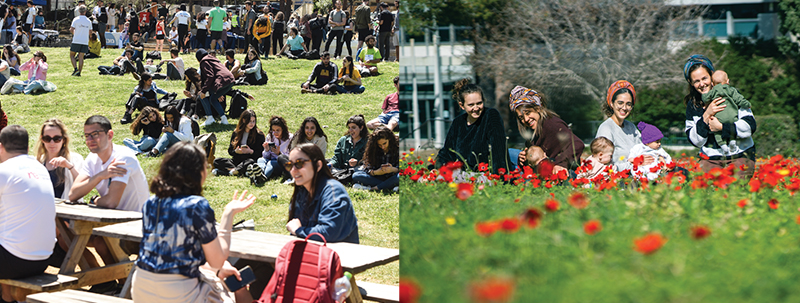
Diversity drives creativity and innovation.
Prof. Adi Salzberg of the Ruth and Bruce Rappaport Faculty of Medicine was recently appointed the Technion’s first Vice President for Diversity and Inclusion.
In addition, last summer the Technion’s Senate approved a declaration in support of fair representation of women among the Technion’s academic faculty. Our efforts in this area are already bearing fruit; this year, there has been extensive recruitment of female faculty members and an increase in female students, with women now comprising 42% of our undergraduate student body. Moreover, I am pleased that we now have seven women deans – two serving as Technion deans and five as faculty deans. This is especially impressive considering the relatively small number of women in the engineering and exact science professions. I hope these deans will serve as a model for young women aspiring to careers in these fields.
Prestigiousprizes
I am also thrilled to share with you that members of the Technion community continue to be singled out for prestigious prizes and awards. In fact, three of our faculty members received the 2022 Israel Prize at a ceremony on Israel’s Independence Day – a record number. They are Prof. Emeritus Joshua Zak of the Faculty of Physics, who was awarded the prize for his contribution to the understanding of condensed matter physics; Prof. Emeritus Yoram Palti of the Faculty of Medicine, whose groundbreaking cancer treatment fights malignant brain tumors in a non-invasive manner; and Prof. Emeritus Moussa B. H. Youdim, a world-renowned expert in pharmacology from the Faculty of Medicine who – along with Technion Prof. Emeritus John Finberg – developed the drug Azilect against Parkinson’s disease.
I anticipate that in the future, it will be increasingly essential for all members of the Technion community to work together as much as possible. By creating multidisciplinary interactions and benefiting from the synergy that comes from collaborative engagements, the Technion will be well-positioned to face upcoming challenges and remain at the forefront of science and technology.

Prof. Uri Sivan,
President of the Technion