
Technion researchers develop eco-friendly method to generate electrical current from seaweed
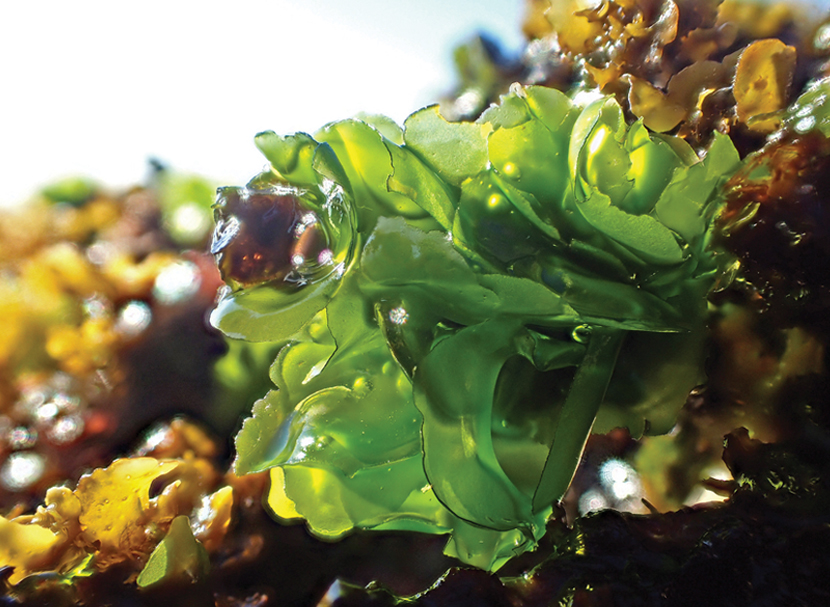
Nancy and Stephen Grand Technion Energy Program (GTEP) researchers, together with a researcher from the Israel Oceanographic and Limnological Research Institute (IOLR), developed a new, environmentally friendly and efficient method that harvests an electrical current directly from seaweed.
The novel idea came to Technion doctoral student Yaniv Shlosberg while he was on the beach. He looked at the seaweed and thought: “they perform photosynthesis, so maybe we can use them to produce current.”
The research was led by Prof. Noam Adir and Yaniv Shlosberg, from the Schulich Faculty of Chemistry and GTEP. They collaborated with Dr. Tunde Toth (Schulich Faculty of Chemistry), Prof. Gadi Schuster, Dr. David Meiri, Nimrod Krupnik and Benjamin Eichenbaum (Faculty of Biology), Dr. Omer Yehezkeli and Matan Meirovich (Faculty of Biotechnology and Food Engineering) and Dr. Alvaro Israel from IOLR in Haifa.
The use of fossil fuels results in the emission of greenhouse gases and other polluting compounds, which are directly linked to climate change. The pollution caused by these fuels, starting from their extraction and transportation around the globe to be used in centralized power plants and refineries, is the driving force behind research into methods of alternative,clean, and renewable energy sources. One of these is the use of living organisms as the source of electrical currents in microbial fuel cells.
Natural resources from the Mediterranean Sea
Technion researchers developed a novel solution using a new photosynthetic source for the electrical current, Ulva (sea lettuce), a species of seaweed that grows naturally on the Mediterranean shore of Israel.
The researchers successfully generated currents on the level of standard solar cells. However, unlike solar cells, the new technology is carbon negative. The seaweed absorbs carbonfrom the atmosphere during the day and while harvesting the current, no carbon is released. At night, the seaweed releases the normal amount of carbon from respiration.
Says Shlosberg: “I believe that our idea can lead to a real revolution in clean energy production.”